

Resin Art Workshop in Pune: The Honest Guide for 2026
- Sachin Naik
- May 29
- 11 min read


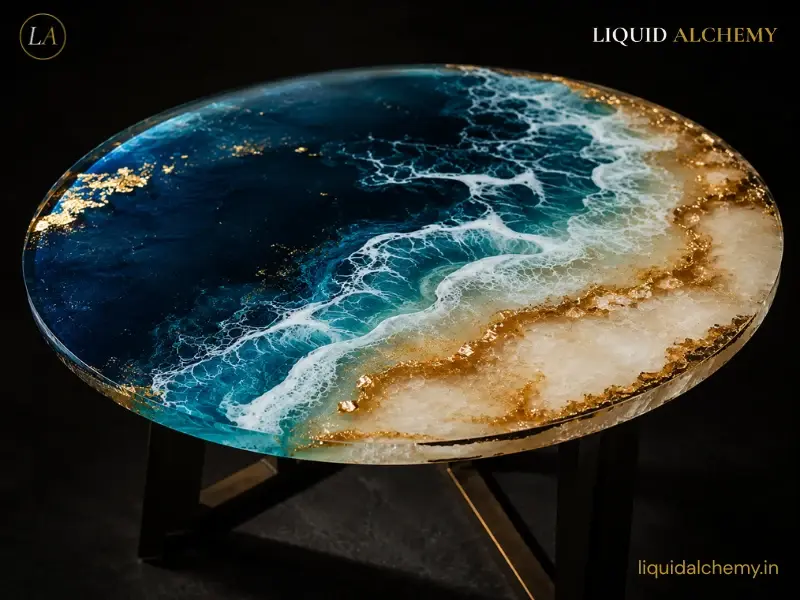
It is a Saturday morning in Pune. You are sitting across from someone who has just finished her second Ocean Wave Table Top. She wipes her gloves clean, holds the finished piece up to the light, and says nothing for a moment. Then: "This is the one I am selling for thirty thousand."
That is what a resin art workshop in Pune can do. Not always. Not automatically. But when the teaching is right, the outcome is exactly that.
This guide is for anyone who is seriously considering attending a resin art workshop in Pune in 2026. It covers what the market looks like, what separates a good workshop from a forgettable one, what you should expect to learn, and what questions to ask before you pay a single rupee.
No fluff. No sales talk dressed up as advice. Just an honest picture.
What Is Resin Art, Really?
Resin art is the craft of working with epoxy resin, a two-part liquid compound that, when mixed in the correct ratio, undergoes a chemical reaction and cures into a hard, glass-like solid. Artists use this property to create a remarkable range of products: wall clocks, serving trays, coasters, geode-inspired wall art, preserved flower frames, ocean wave table tops, chess boards, keychains, bookmarks, and much more.
What makes resin art commercially interesting is the combination of visual impact and scalability. A single well-made ocean wave resin table top commands between ₹25,000 and ₹40,000 in the Indian market. Coasters sell in sets for ₹800 to ₹2,500. Keychains and bookmarks make excellent corporate gifting items and can be produced in batches.
The craft has grown significantly in India over the last four years. What began as a niche imported aesthetic has become a mainstream premium home décor category, with buyers actively seeking handcrafted resin pieces over mass-produced alternatives.

The Resin Art Workshop Scene in Pune: What You Will Actually Find
Pune has a reasonably active resin art workshop market. A quick search will return options ranging from studio spaces in Aundh, Kothrud, Koregaon Park, and Hadapsar to pop-up sessions in cafes and co-working spaces.
Most of what you will find falls into one of two categories.
The single-day activity session.
These are typically two to four hours long, priced between ₹2,500 and ₹5,000, and designed around making one or two products. You will usually pour a coaster or paint a small canvas. The focus is on the experience rather than the skill. You leave with a product, some photos for Instagram, and a broad understanding of what resin looks like when it cures. What you do not leave with is the ability to replicate what you made, price it, or sell it.
The multi-day workshop.
These are fewer in number. They run across two to three days, cover a broader range of products and techniques, and cost between ₹8,000 and ₹18,000. Quality varies enormously. Some are run by serious practitioners who understand both the craft and the business. Others are hobby classes with a higher price tag.
The gap between these two formats is not just about duration or price. It is about intent.
A good multi-day workshop is designed to transform a complete beginner into someone who can make sellable products and understand how to run a small resin art business. A single-day session is designed to give you an enjoyable afternoon.
Neither is wrong. But if you are reading this guide, you are probably looking for the first kind.
What Makes a Resin Art Workshop Worth Paying For
Before you register for any workshop in Pune, here are the five things that separate a genuinely valuable programme from one that will leave you with a pretty coaster and a vague sense that you learned something.
1. The number of products and techniques covered
A two-hour session will teach you the basics of mixing and pouring. A properly structured two-day workshop should teach you a minimum of ten to fifteen distinct products spanning different complexity levels, and the underlying techniques that make each product possible.
Why does this matter? Because techniques are transferable. Once you learn how to execute an ocean wave effect, you can apply it to coasters, trays, table tops, and wall art. Once you learn how to preserve organic materials in resin, you can make flower frames, varmala preservation pieces, and spice inlays. Each technique you learn multiplies the number of products you can eventually create and sell.
At Liquid Alchemy's 2-Day Resin Art Intensive, students work across fifteen products and forty-five distinct techniques. The range spans hands-on individual work, group projects, and instructor demonstrations of advanced pieces. That number, forty-five techniques, is worth pausing on: it means that by the end of two days, you have the technical vocabulary to create over 150 variations of products independently.
2. Whether it covers the business side at all
This is the single biggest differentiator between a hobby class and a professional training programme. Most resin workshops in India teach you how to make things. Very few teach you how to sell them.
Pricing resin art is genuinely difficult. Material costs vary. Time investment is hard to account for. The premium market requires a completely different pricing approach than the budget market. Getting this wrong means either undercharging for hours of work or pricing yourself out of the market before you start.
A workshop worth attending should cover: how to calculate your cost per product, how to price for different market segments, how to photograph your work for Instagram, how to approach corporate gifting clients, and how to manage your first ten sales without losing money.
These are not extras. They are the difference between someone who makes beautiful resin art at home as a hobby and someone who generates a real income from it.
3. Batch size and individual attention
Resin art is a hands-on craft. It involves mixing ratios, timing decisions, layering choices, and technique adjustments that are difficult to communicate in a group of twenty people. If your instructor is managing a room full of students, the level of personalised guidance you receive drops significantly.
Look for workshops with small, capped batches. Eight to twelve students is a reasonable range for a resin art session. Anything larger and you are essentially watching a demonstration with occasional guidance rather than genuinely learning under supervision.
At Liquid Alchemy, batches are capped at eight students. This is deliberate. In two days of intensive work, every student needs to make mistakes, ask questions, and have those questions answered in real time by someone who knows the craft deeply.
4. What happens after the workshop ends
Learning resin art in two days is a beginning, not a completion. There will be techniques you watched and understood in the moment but need to revisit when you are working alone at home. There will be products you want to attempt that were not covered in the workshop itself. There will be business questions that arise when you encounter your first real customer.
A workshop that ends the moment you walk out the door is one that has given you a skill set but no ongoing support for applying it. Look for programmes that offer post-workshop resources: video tutorials, technique refreshers, a community where you can ask questions.
The Liquid Alchemy post-workshop student portal includes video tutorials for every technique covered in the workshop, bonus product walkthroughs not taught during the two days, and access to the business session content for reference. Students retain access to this portal permanently after attending.
5. The instructor's actual experience
Resin art instructors in India range from hobbyists who taught themselves six months ago to serious practitioners with years of experience across multiple product categories, materials, and techniques. There is no regulatory body certifying resin art instructors in India, which means the market is entirely self-regulated.
Before registering for any workshop, look at the instructor's own work. Not just the polished finished photographs, but the range and complexity of what they make. Look at how long they have been teaching. Look at what their past students have gone on to do.

What a Two-Day Resin Art Intensive Actually Looks Like
For those who want specifics, here is what two full days of structured resin art training looks like at a properly designed workshop.
Day One typically covers foundational techniques and smaller, faster-curing products. This means coasters, keychains, and bookmarks in the hands-on tier, where every student works independently on their own pieces. These products are chosen deliberately: they cure quickly enough to see results within the same session, they require the widest range of foundational techniques, and they are among the most commercially viable products for a new resin art business.
By midday on Day One, students have mixed resin, added pigments, worked with alcohol inks, created ocean wave and geode effects at small scale, and begun to understand the timing decisions that separate a finished piece from a failed one.
Day Two moves into larger, more complex products. Group projects like wall clocks and chess boards introduce students to the challenges of larger pours: heat management, layering, levelling, and finish work. Instructor demonstrations of advanced pieces, including the Ocean Wave Table Top that commands ₹30,000 in the market, give students the visual reference and technical understanding to attempt these independently after the workshop.
The six business sessions woven across both days cover:
Pricing and cost calculation. How to work out exactly what each product costs you to make and how to price it for different market segments, from gifting platforms to corporate clients.
Packaging and presentation. How packaging affects perceived value and what packaging investment is appropriate at different price points.
Your first ten sales. The practical sequence for moving from finished products to first paying customers, covering online platforms, local networks, and Instagram.
Instagram marketing for resin artists. Content strategy, photography tips, and how to build a following that converts to buyers rather than just admirers.
Corporate gifting. How to approach corporate clients, what products work best for bulk orders, and how to price custom orders profitably.
Scaling. What comes after the first ten sales: whether to grow through teaching, through products, or through both.
The Numbers: What Is the Realistic Return on a ₹14,999 Workshop Investment
This is the question most people are thinking but not always asking.
Here is an honest framework for thinking about it.
The workshop fee at Liquid Alchemy is ₹14,999. This includes all materials and tools used during the two days, all finished products you make (which you take home), the certificate of completion, and permanent access to the post-workshop student portal.
The first commercial question: what can you sell after the workshop?
A set of four resin coasters sells for ₹1,200 to ₹2,500 depending on complexity and finish. Material cost for a set is typically ₹300 to ₹600. A resin wall clock sells for ₹4,000 to ₹8,000. An ocean wave table top, which the instructor demonstrates in full during the workshop, commands ₹25,000 to ₹40,000 in the premium segment.
You are not going to make and sell an ocean wave table top in your first week. But coasters are achievable quickly, and a modest target of five to eight sets per month at ₹1,500 to ₹2,000 per set produces a monthly income of ₹7,500 to ₹16,000 from a single product category, working part-time.
As your skills develop and your product range expands, the economics improve significantly. Five ocean wave table tops a month is ₹1,00,000 in revenue. That is not a beginner's target. But it is a realistic eighteen-month goal for a disciplined, business-oriented student who takes the workshop seriously.
The more immediate question is: how many products do you need to sell to recover the workshop fee? At ₹1,500 per coaster set, approximately ten sets. At ₹5,000 per wall clock, three clocks. Most students who approach resin art with commercial intent recover the workshop fee within their first two to three months of selling.
Who Should Attend a Resin Art Workshop in Pune
Not everyone who finds resin art beautiful should be in a workshop. Being honest about this serves everyone better.
A resin art workshop is the right investment for you if:
You are looking for a creative skill with a genuine commercial application, not just a hobby activity. You are willing to invest time after the workshop practising, making mistakes, and building a body of work before expecting to earn from it. You have access to a workspace at home where you can pour and cure resin safely, meaning a well-ventilated space with a level surface. You are prepared to treat the business sessions as seriously as the craft sessions.
It may not be the right investment right now if:
You are drawn to resin art primarily for the aesthetic experience rather than the commercial outcome. You have no realistic plan or space for where to practise after the workshop ends. You expect the workshop itself to be the endpoint rather than the beginning.
Resin art is genuinely learnable by anyone with patience and attention to detail. It does not require prior artistic training or experience. But the workshop is a starting point, not a shortcut.
Frequently Asked Questions About Resin Art Workshops in Pune
Is resin art safe to learn and practise at home?
Yes, with the right precautions. Epoxy resin in its uncured state requires ventilation and protective equipment, specifically nitrile gloves and a mask rated for organic vapours.
Once cured, resin is completely inert and safe to handle. The workshop covers safety setup in detail, including how to create a safe workspace at home without expensive equipment.
Do I need any prior experience to attend?
No. The Liquid Alchemy 2-Day Intensive is designed for complete beginners. The curriculum starts from foundational techniques and builds progressively. Prior art or craft experience is helpful but not required.
What do I take home from a two-day workshop?
At Liquid Alchemy, students take home all products from the hands-on and group tiers: coasters, keychains, bookmarks, a wall clock, a resin tray, and a chess board in various states of completion. You also receive a certificate of completion and access to the post-workshop portal.
How long until I can start selling my work?
This varies. Most students who practise consistently after the workshop are ready to sell their first products within four to eight weeks. The business sessions in the workshop are designed to accelerate this timeline by giving you a clear first-steps plan from Day Two.
Is ₹14,999 a reasonable price for a resin art workshop in Pune?
Context matters. A single-day activity session at ₹3,000 and a two-day professional intensive at ₹14,999 are not comparable products. The question is not whether ₹14,999 is a lot of money, which it is, but whether what you receive in return justifies the investment. Forty-five techniques, fifteen products, six business sessions, all materials, finished products to take home, and a post-workshop portal is a substantial curriculum. Measured against the commercial return on a serious approach to the craft, the investment is recoverable within months.

A Note on Choosing the Right Workshop for You
There are good workshops in Pune beyond Liquid Alchemy. The point of this guide is not to tell you that there is only one option worth considering. It is to give you the framework to evaluate any workshop you are considering against criteria that actually matter.
Ask any workshop you are evaluating the following questions before registering:
How many products will I make?
How many techniques will I learn?
What is the batch size?
What post-workshop support do you provide?
Do you cover the business side of resin art, and if so, in how much detail?
The answers to these five questions will tell you more than any marketing page.
If you want to evaluate Liquid Alchemy directly, the full workshop curriculum, the list of forty-five techniques, the six business sessions, and everything that is included in the ₹14,999 fee is detailed on the workshop page. No hidden specifics, no vague promises.
Ready to Take the Next Step?
The 2-Day Resin Art Intensive at Liquid Alchemy runs in small batches of eight students at the studio in Hadapsar, Pune. The next available batch dates, current pricing, and the complete curriculum are on the workshop page.
If you have questions before registering, you can reach Sachin directly on WhatsApp at 8483829386.
Liquid Alchemy is a premium resin art studio based in Hadapsar, Pune. The studio offers the 2-Day Resin Art Intensive Workshop, handcrafted resin art products shipped pan-India, and a gated post-workshop student portal. Founder and chief instructor: Sachin Naik.


Comments